Tres importantes universidades de investigación renuncian al nuevo acuerdo con Elsevier
Grove, Jack. “Three Major Research Universities Opt Out of New Elsevier Deal.” Times Higher Education, 22 de enero de 2026. https://www.timeshighereducation.com/news/three-major-research-universities-opt-out-new-elsevier-deal En enero de 2026, tres universidades británicas centradas en investigación anunciaron que no renovarán sus acuerdos con la editorial académica Elsevier, a pesar de que una negociación nacional liderada por el organismo sectorial Jisc…
¿Un pez en artículos médicos? El extraño rastro de textos “contaminados” en revistas científicas
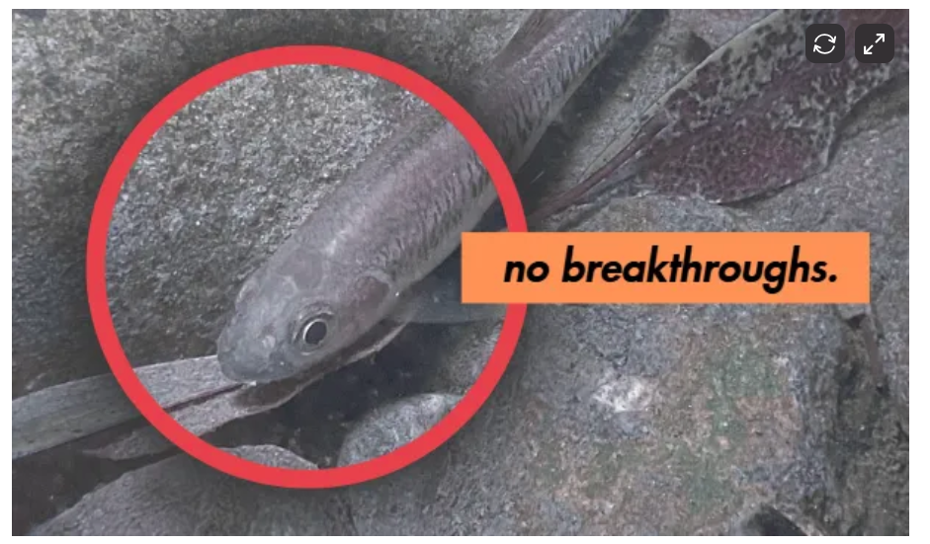
Publicado en no break throughshttps://nobreakthroughs.substack.com/p/is-this-fish-a-sign-of-fraud-fabrication¿Un pez en artículos médicos? El extraño rastro de textos “contaminados” en revistas científicas En los últimos meses, investigadores y editores han comenzado a detectar algo desconcertante en artículos científicos revisados por pares: la aparición de nombres latinos de especies animales y vegetales —peces, plantas e insectos— insertados sin sentido en investigaciones sobre salud humana, ingeniería o ciencias sociales. El fenómeno no responde a una disciplina concreta ni a un solo editor, y por ahora no tiene una explicación clara.* El hallazgo inicial: el fenómeno fue señalado por Leon Xiao, profesor en la City University of Hong Kong, al detectar nombres científicos como Parazacco spilurus en artículos sin relación alguna con biología.* Textos fuera de lugar: especies animales y vegetales aparecen en estudios sobre fragilidad cognitiva, lesiones en bomberos, biomarcadores o pérdida auditiva, sin justificación científica.* Editoriales afectadas: los artículos identificados pertenecen a revistas de grandes editoriales como Springer Nature, Elsevier y Frontiers.* Patrones geográficos: hasta ahora, los artículos con estas anomalías tienen autores afiliados a instituciones chinas, aunque no se establece una causa directa.* Relación con “tortured phrases”: el fenómeno recuerda a las llamadas tortured phrases, sustituciones absurdas de términos científicos detectadas previamente en miles de artículos y asociadas a traducción automática o parafraseo algorítmico.* Ejemplo documentado: en un artículo de Scientific Reports sobre lesiones en bomberos, Parazacco spilurus aparece repetidamente en tablas estadísticas y nombres de variables.* Respuesta editorial: el editor en jefe de Scientific Reports confirmó que se investigará tanto el artículo señalado como el problema de redacción a mayor escala.* Más allá de la ciencia: los mismos nombres latinos aparecen en novelas web y listados comerciales, lo que sugiere el uso de herramientas automatizadas compartidas entre contextos no académicos y científicos.* Sin conclusión definitiva: por ahora no se puede afirmar si se trata de fraude, errores de traducción, uso de IA o una combinación de factores, pero el paso de estos textos por la revisión por pares genera preocupación.***************************Fishy Text in Research Articles: Fraud or Fault?A reel big mystery as a strange new species of error appears in major journalsJack RyanJan 11, 2026What do the predaceous chub (Parazacco spilurus), a non-existent species of rattlebox moth (Utetheisa kong), and a paper mulberry plant (Broussonetia papyrifera) have in common?They’ve all started appearing in scientific journal articles over the last few months, but peculiarly, you can find them in articles unrelated to the study of wildlife biology or conservation or botany. The fauna and flora are appearing in research about hearing loss in the elderly, nerve repair and ankle injuries in firefighters. Wha….?What does the predaceous chub have to do with that?Last week, I received an email from Leon Xiao, assistant professor at the City University of Hong Kong. He had begun to notice Latin names for a variety of species were appearing in all sorts of places. After a little sleuthing, he’d discovered the phrases were turning up in scientific papers by various publishers, including Springer Nature, Elsevier and Frontiers.Xiao wanted to bring it to the wider attention of the scientific community and I wanted to dig in and try and figure out exactly what is going on.Spoiler alert: I haven’t figured it out yet. But have found a ton of Weird Stuff.Of these phrases, the one Xiao was seeing regularly was:Parazacco spilurus subsp. spilurus.1This is the scientific name for the predaceous chub, though the “subsp. spilurus” is an unnecessary addition2. This isn’t an impressive fish. It’s like the vanilla icecream of fish. If someone showed you a picture of it, you’d say “that’s a fish”.VIDEO : https://youtu.be/Z8wIx0xqXEEBut Parazacco spilurus is showing up in several journal articles with the following headlines:“Integrated transcriptomic analysis identifies lysosomal autophagy-related genes in sarcopenia”“Analysis of influencing factors of cognitive frailty in older adults community patients based on restricted cubic spline”“Flow cytometry-based validation of soluble biomarker detection”There is no reason why the chub should find itself in these places and, indeed, if it did it would not end well for the fish, I imagine.Among the papers, there are not always obvious commonalities in content, but all authors from papers featuring Parazacco so far appear to be from Chinese institutions.And it’s not only research where Parazacco is appearing.It’s also, weirdly, finding itself in listings on Alibaba for … adhesive?So, here we have ourselves a little mystery, a new species of unknown error in science…Mysterium verbi distortiIn keeping with our Latin theming so far, I’m calling this phenomenon Mysterium verbi distorti.I’ve taken it from a (probably extremely poorly translated3) idea of “Tortured Phrases” — phenomena in the scientific literature which have become a sign of potential error and integrity breaches.If you’re not up with your scientific integrity investigations, tortured phrases are a concept identified by Guillaume Cabanac, Cyril Labbe and Alexander Magazinov a few years back. You don’t have to look far to find them. Cabanac and co. found them in more than 3,000 papers to January 2022.They’re bloody good fun too. For instance, you may be so lucky to have seen the term “bosom peril” appear in a scientific paper. This is a rephrasing of the term “breast cancer”. Similar substitutions appear for words like artificial intelligence (replaced with counterfeit consciousness [lol]) or smart home (replaced with clever home [lmao]).When Xiao pointed these Latin names out, tortured phrases were the first thing I thought of: Perhaps these substitutions were being made via automated tools — either AI or word libraries or paraphrasing tools — as non-English speaking authors were translating their work into English. The errors then, somehow, slipped through editing and the peer review process, which is a little embarrassing.For instance, take this article, published in Springer Nature’s Scientific Reports on October 29, 2025:Epidemiological attribution of knee and ankle injuries in firefightersThe study’s abstract says it “aimed to evaluate the main factors of knee and ankle injuries among Chinese firefighters, focusing on the role of training arrangements, training conditions, and knowledge of training injuries.”And yet, here we find the predaceous chub, that devil of a fish!!!!!In Table 7, Parazacco spilurus appears across the final row of the entire table. Every single entry begins with the Latin name.The section that follows this table also includes another Latin species name — broussonetia papyrifera — that is inserted directly in the middle of another sentence.This study is about human beings, sure, but there are three instances in this paper where Homo sapiens appears. Two of these appearances are bizarre. The paper says:“Secondly, the included risk factors such as “training load (A2)”, “homo sapiens protective equipment (B4)”, and “rehabilitation measures (C4)”It seems in the corresponding table that discusses statistics on these variables, Table 4, that the B4 category is titled “personal protective equipment”. This seems to me like a substitution, similar to that seen in tortured phrases above.I reported the issues in this paper to Scientific Reports on Friday last week. The team provided a statement on Tuesday, January 13.4It comes via Chief Editor, Rafal Marszalek: “Thank you for flagging this. We'll investigate the paper thoroughly, and my colleagues in the research integrity team will dig into the phrasing issue more generally and raise it with the wider publishing community.”These aren’t the only terms. So far, here’s the list of strange Latin names that have been inserted across the literature:Parazacco spilurus subsp. spilurusBroussonetia papyriferaUtetheisa kongPhoxinus phoxinus subsp. phoxinusCastanopsis chinensisSome of the offending species, left to right, Broussonetia papyrifera, Utetheisa species (not kong), Phoxinus phoxinus and Castanopsis chinensisMost of these species names seem to appear subsequent to publication in August. Some of the papers I have viewed were accepted, at the latest, around September. There are at least 20 papers identified with the first phrase, and likely more that I can’t access with a freelancers institutional login :|, the others are a little less common, though Broussonetia and Utetheisa are appearing a little more.Of the above five, there’s another strange place where you will find all these Latin phrases…On the website, Webnovel, I stumbled across this story, if we can be so generous to call it that:The earth is frozen: I have built a doomsday safe zoneI didn’t read the whole thing because my brain is already polluted enough by the internet but my guess would be that it’s AI-generated.Several chapters (all?) feature Latin species names totally unrelated to the story. For instance, Chapter 12 includes both Parazacco spilurus subsp. spilurus and Utetheisa kong, in amongst a story about, I assume, the guy from I Am Legend trying to store water in his warehouse at the end of the world.You can see, it also features weird additions.Phoxinus phoxinus, dear reader, is a Western European fish colloquially known as the “minnow”. It has, to my knowledge, not escaped the bounds of the marine world and started trading stocks and crypto.SO what the HELL is going on here? We have scientific literature, strange doomsday webnovels and Alibaba express listings.Well:I am not sure yet but I have decided to point this out so the scientific publishers and researchers with peer review assessments may look for these terms, or other strange terms, in the literature right now.[Small update 12-01: some speculation by followers on Bluesky using LLM that this is a translation tool issue. This may well be the case and there seems to be evidence for it, but that doesn’t really give us a reason as to why these phrases made it into so much of the scientific literature…]5I have had contact with several authors of the papers here. The responses have not shed light on how these insertions came to be. I believe one response was generated by AI and the documents provided by the researchers as evidence of an AutoText mess up seemed to have been created in response to the discovery. I am continuing to dig into this.At the very least, the spurious and nonsensical word additions should be removed from these papers and the publishers should investigate where the data associated with these papers comes from.In terms of timing, all the spurious references seem to appear in the literature after August 2025, though some articles were submitted around May. Does this correspond with some firmware update of a particular LLM, AI or translation software?The fact all of these terms appear in a webnovel with well over 70 chapters could be suggestive of the fact they were generated, perhaps in Chinese, then translated with a tool, which did not accurately convert across. Whatever tool is being used, it’s apparent that the tool is in use in the scientific world, and may be able to be accessed by the public. That’s a useful thread to pull on.For now, our mysterium verbi distorti remains just that. It’s too early to say just what these phrases might indicate, but alarm bells are ringing!!!! If it’s merely a translational error, then that still makes me feel a little uneasy — so much of this stuff is getting past peer review, into high quality journalsI hope to have a little more detail next week…
Tenemos que hablar sobre la industria multimillonaria que tiene secuestrada a la ciencia
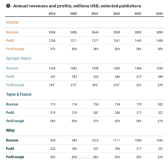
Publicado en ZME Sciencehttps://www.zmescience.com/science/news-science/we-need-to-talk-about-the-billion-dollar-industry-holding-science-hostage/Tenemos que hablar sobre la industria multimillonaria que tiene secuestrada a la cienciaTus impuestos financian la investigación. Y vuelves a pagar para leerla.Mihai Andreiby, 25 de noviembre de 2025, en Noticias, CienciaEl modelo de negocio de la mayoría de las editoriales científicas es tan audaz que cuesta creer que funcione. El argumento es el siguiente: consigues que algunas de las personas más inteligentes del planeta creen tu producto de forma gratuita. A continuación, consigues que otros expertos, personas que controlan la calidad de ese producto, también lo hagan de forma gratuita. Por último, vendes el producto a las mismas personas que lo han creado (y a los contribuyentes que lo han financiado) con un margen de beneficio exorbitante.Si intentaras presentar esta idea en Shark Tank, te echarían de la sala entre risas. Pero en el mundo de las publicaciones científicas, esto es algo habitual.Un nuevo y demoledor análisis, «The Drain of Scientific Publishing» (El agotamiento de las publicaciones científicas), sugiere que el sistema de publicaciones científicas se ha convertido en un grave problema para la ciencia. Mucho más que simples y molestos muros de pago, se trata de un agotamiento sistémico que está dañando activamente la capacidad de la humanidad para resolver problemas.Bienvenidos a la máquina¿Por qué los académicos aguantan esto? Porque no tienen otra opción.Los académicos tienen que demostrar constantemente su valía, y eso normalmente significa publicar estudios, preferiblemente en revistas de prestigio. Es la famosa doctrina de «publicar o perecer». Si no se publica un flujo constante de artículos en revistas de «alto impacto», no se obtienen subvenciones, no se consigue la titularidad y, en la práctica, se deja de existir como científico viable.Las editoriales han convertido esta ansiedad en un arma. Saben que los investigadores están desesperados por publicar para ascender en su carrera, por lo que han convertido el sistema en un negocio de volumen. «En sus inicios, las revistas estaban dirigidas a comunidades pequeñas y especializadas de lectores y, a menudo, sobrevivían gracias a la filantropía, el altruismo o el apoyo institucional», escriben los autores de la nueva reseña. «Sin embargo, desde la década de 1950, las publicaciones se han convertido en elementos clave en la competencia cada vez más feroz por el prestigio. El número de publicaciones en todo el mundo aumentó exponencialmente. Durante el mismo período, las editoriales comerciales sustituyeron a las antiguas organizaciones sin ánimo de lucro como fuerzas dominantes en lo que, a finales del siglo XX, se había convertido en una industria altamente rentable».La edición científica está ahora dominada por un «oligopolio» de gigantes comerciales como Elsevier, Springer Nature, Wiley y Taylor & Francis. Durante los últimos cinco años, estas empresas han mantenido de forma constante unos márgenes de beneficio superiores al 30 %. Elsevier, el peso pesado de este grupo, presume constantemente de márgenes superiores al 37 %.Para ponerlo en perspectiva, compárelo con el competitivo mundo de las grandes petroleras o el sector automovilístico. Toyota opera con un margen del 10 %; ExxonMobil también ronda el 10 %. Incluso Apple, la empresa favorita en cuanto a rentabilidad tecnológica, se sitúa en torno al 23 %. Las editoriales académicas están superando en beneficios a las grandes tecnológicas y petroleras vendiendo documentos que ni siquiera han escrito.Entre 2019 y 2024, sólo estas cuatro empresas obtuvieron más de 14,000 millones de dólares en beneficios. Para ponerlo en perspectiva, en 2024, la Fundación Nacional para la Ciencia, pilar de la innovación científica estadounidense, tenía un presupuesto de aproximadamente 9,100 millones de dólares. Mientras tanto, solo los investigadores norteamericanos pagaron a las editoriales más de 2,270 millones de dólares ese mismo año.La doble penalización: pagar por trabajarY la cosa empeora. Antes, el coste quedaba oculto en las suscripciones a las bibliotecas. Ahora, bajo el pretexto del «acceso abierto», por el que los artículos son de lectura gratuita para el público, el coste se ha trasladado directamente a los científicos.Ahora bien, si intentas leer un estudio reciente, es muy probable que no haya ningún muro de pago. Una gran noticia, ¿verdad? Por fin, la ciencia es abierta.Pero los investigadores no solo envían su contenido de forma gratuita. Ahora pagan «tasas de procesamiento de artículos» (APC) para que se publique su trabajo. Estas tasas generaron casi 9,000 millones de dólares para las principales editoriales entre 2019 y 2023.«Las editoriales comerciales han logrado monetizar los mandatos de los financiadores para el acceso abierto. Las tarifas de publicación de los autores se han convertido en nuevas fuentes de ingresos. En lugar de democratizar las publicaciones científicas, el acceso abierto ha ayudado a las editoriales comerciales a generar más beneficios. Se necesitan reformas más estrictas para abordar los factores desalineados de las publicaciones científicas», escribieron los investigadores.«Está claro que las editoriales están ganando mucho dinero con el trabajo de los investigadores, y en realidad no están haciendo gran cosa», afirma Lonni Besançon, profesora adjunta de Visualización en la Universidad de Linköping. Besançon, que ha expresado abiertamente la necesidad de una reforma, señala otro defecto crítico: la rendición de cuentas.«Vemos un gran efecto en cómo se corrige la ciencia. No hay incentivos para que nadie intervenga y haga el trabajo [de corrección]. ¿Por qué iban a hacerlo los editores? No se les paga por ello. Nadie es responsable... no hay propiedad ni agencia en la corrección de la ciencia».Esta insaciable demanda de «contenido» se basa en el trabajo no remunerado de los revisores pares. Sólo en 2020, los investigadores dedicaron aproximadamente 130 millones de horas a la revisión por pares. Ese es tiempo que no se dedica al laboratorio, ni a la enseñanza, ni a resolver problemas reales. No hay nada malo en la revisión por pares en sí misma. Sigue siendo la mejor forma que tenemos de garantizar un nivel de calidad estándar. Pero se trata de un trabajo no remunerado realizado por expertos en su campo.Peor aún, esta obsesión por el volumen está rompiendo la maquinaria de la verdad misma. Para mantener los beneficios, las editoriales necesitan rapidez. Esto ha llevado a una «osificación», en la que el gran volumen de artículos ralentiza el progreso porque nadie tiene tiempo para leer, reflexionar o asumir riesgos. Hemos mercantilizado la ciencia como si fuera comida rápida. Y, cada vez más, muchos artículos empiezan a parecerse a la comida rápida.Esto, por supuesto, ha llevado a la industrialización del fraude. Las «fábricas de artículos» —organizaciones falsas que producen estudios falsos a cambio de una tarifa— están saturando los registros científicos. También estamos viendo un aumento de tonterías generadas por IA y círculos de revisión por pares. Marcas enteras de revistas han colapsado bajo el peso de esta basura.«Las editoriales comerciales están íntimamente entrelazadas con el mundo académico, tanto en la forma en que recopilan datos sobre nosotros como en la forma en que se integran en la evaluación académica», señala Dan Brockington, profesor de ICTA-UAB e ICREA y coautor del estudio.¿Podemos solucionarlo?Los autores del análisis son tajantes: no podemos trabajar con las editoriales comerciales para solucionar esto. Es como esperar que las empresas petroleras solucionen el cambio climático: sus intereses son fundamentalmente incompatibles.Proponen la «recomunalización». Esto significa que las universidades, los financiadores y los gobiernos deben dejar de alimentar a la bestia. Sugieren modelos como el «Diamond Open Access», en el que las revistas son financiadas por las universidades y son de libre acceso y publicación.Besançon está de acuerdo en principio, incluso colabora en la gestión de una revista que funciona exactamente según este modelo. «Estoy de acuerdo en que necesitamos un cambio drástico». Sin embargo, considera que es una ilusión esperar que esto suceda de la noche a la mañana. La razón principal, según él, es el prestigio. Las revistas importantes gozan de gran prestigio y son las preferidas por los investigadores.«Es ingenuo pensar que esto va a suceder de la noche a la mañana», admite Besançon. «Si le preguntas a un investigador si prefiere publicar un artículo en nuestra revista o en una revista de Nature, por supuesto que elegirá la revista de Nature. Porque, en la actualidad, a los investigadores se les evalúa en función del prestigio de sus publicaciones».Tenemos la tecnología para cambiar el sistema (existen plataformas Diamond Open Access), pero nos falta la alineación cultural. Mientras un artículo en una revista con fines lucrativos te consiga un trabajo y uno en una revista gestionada por la comunidad no, los miles de millones seguirán fluyendo hacia esas editoriales.«Veo muchos obstáculos para que esto suceda», afirma Besançon. «Es muy difícil alinear las necesidades y opiniones de todos los países del mundo... En general, estoy de acuerdo, pero no veo que el cambio vaya a producirse a corto plazo».Sin embargo, en última instancia, el sistema actual es una elección. Da prioridad a las carteras de acciones de unas pocas empresas multinacionales sobre la integridad de los registros científicos. Desperdicia el tiempo y los recursos de los institutos de investigación.El statu quo se ha convertido en una carga para la ciencia, y podemos hacerlo mucho mejor.***********************************************We Need to Talk About the Billion-Dollar Industry Holding Science HostageYour tax dollars fund the research. You pay again to read it.Mihai Andreiby November 25, 2025 in News, ScienceThe business model of most scientific publishers is so audacious it’s hard to believe it works. Here’s the pitch: You get some of the smartest people on Earth to create your product for free. Then, you get other experts, people to quality-control that product, also for free. Finally, you sell the product back to the very people who made it (and the taxpayers who funded them) at an exorbitant markup.If you tried to pitch this on Shark Tank, you’d be laughed out of the room. But in the world of scientific publishing, this is just regular business.A damning new analysis, “The Drain of Scientific Publishing,” suggests that the science publishing system has become a major problem for science. Far more than just annoying paywalls, this is a systemic drain that’s actively damaging humanity’s ability to solve problems. Welcome to the MachineWhy do academics put up with this? Because they have to.Academics need to constantly prove their worth, and that usually means publishing studies, preferably in top journals. This is the infamous “publish or perish” doctrine. If you don’t have a steady stream of papers appearing in “high-impact” journals, you don’t get the grant, you don’t get tenure, and you effectively cease to exist as a viable scientist.Publishers have weaponized this anxiety. They know that researchers are desperate to publish to climb the career ladder, so they have turned the system into a volume business. “In their early days, journals served small, dedicated communities of readers and often survived on philanthropy, altruism or institutional support,” write the authors of the new review. “However, since the 1950s publications have become key tokens in the increasingly fierce competition for prestige. The number of publications worldwide increased exponentially. During the same period, commercial publishers took over from older non-profits as the dominant forces in what had, by the late twentieth century, become a highly profitable industry.”Scientific publishing is now dominated by an “oligopoly” of commercial giants including Elsevier, Springer Nature, Wiley, and Taylor & Francis. For the last five years, these companies have consistently maintained profit margins over 30%. Elsevier, the heavyweight champion of this group, consistently boasts margins over 37%. To put that in perspective, compare it to the cutthroat world of Big Oil or the automotive sector. Toyota runs at a 10% margin; ExxonMobil is also around 10%. Even Apple, the darling of tech profitability, sits around 23%. Academic publishers are out-profiting Big Tech and Big Oil by selling documents they didn’t even write.Between 2019 and 2024, these four companies alone raked in over $14 billion in profits. To put it into perspective, in 2024, the National Science Foundation, the bedrock of American scientific innovation, had a budget of roughly $9.1 billion. Meanwhile, North American researchers alone paid publishers over $2.27 billion that same year. The Double Dip: Paying to WorkIt gets worse. In the past, the cost was hidden in library subscriptions. Now, under the guise of “Open Access”, where papers are free for the public to read, the cost has shifted directly to the scientists. Now, if you try to read a recent study, there’s a good chance there won’t be a paywall at all. Great news, right? Finally, science is open.But researchers don’t just submit their content for free. They now pay “Article Processing Charges” (APCs) to have their work published. These fees generated nearly $9 billion for top publishers between 2019 and 2023. “Commercial publishers have managed to monetize funder mandates for Open Access. Author publication fees have become new revenue streams. Rather than democratizing scientific publishing, Open Access has helped commercial publishers generate more profits. More stringent reforms are required to tackle the misaligned drivers of scientific publishing,” the researchers wrote.“It’s clear that publishers are making a lot of money out of researchers’ work, and they’re actually not doing much,” says Lonni Besançon, an Assistant Professor of Visualization at Linköping University. Besançon, who has been vocal about the need for reform, points out another critical flaw: accountability. “We see a big effect in how science is corrected. There are no incentives for anyone to chime in and do the work [of correction]. Why would publishers do the work? They don’t get paid for it. No one is responsible… there’s no ownership or agency in correcting science.”This insatiable demand for “content” relies on the unpaid labor of peer reviewers. In 2020 alone, researchers donated an estimated 130 million hours to peer review. That is time not spent in the lab, not spent teaching, and not spent solving actual problems.There’s nothing wrong with peer-review per se. It’s still the best way we have to enforce a standard quality. But this is unpaid labor performed by experts in their field.Worse, this volume obsession is breaking the machinery of truth itself. To keep the profits flowing, publishers need speed. This has led to “ossification,” where the sheer volume of papers actually slows down progress because no one has time to read, reflect, or take risks. We’ve commodified science like fast food. And, increasingly, a lot of papers are starting to look like fast food.This, of course, has led to the industrialization of fraud. “Paper mills” — fake organizations that churn out bogus studies for a fee — are clogging the scientific record. We are also seeing a surge of AI-generated nonsense and peer review rings. Entire journal brands have collapsed under the weight of this garbage.“Commercial publishers are intimately entwined with academia, both in the way they collect data about us and in how they are integrated into academic evaluation,” notes Dan Brockington, ICTA-UAB and ICREA professor and co-author of the study. Can We Fix It?The authors of the analysis are blunt: We cannot work with commercial publishers to fix this. It’s a bit like expecting oil companies to fix climate change — their interests are fundamentally misaligned.They propose “re-communalization.” This means universities, funders, and governments need to stop feeding the beast. They suggest models like “Diamond Open Access,” where journals are sustained by universities and are free to read and free to publish.Besançon agrees in principle — he even helps run a journal that operates on this exact model. “I agree that we need drastic change.” But he thinks it’s wishful thinking to expect this to happen overnight. The main reason, he says, is prestige. Big journals have a lot of prestige, and they’re preferred by researchers.“It’s a naive take to think that this will actually happen overnight,” Besançon admits. “If you ask a researcher if they want a paper in our journal or in a Nature journal, of course, they will go for the Nature journal. Because currently, researchers are evaluated based on the prestige of their publication.” We have the technology to change the system (Diamond Open Access platforms exist), but we lack the cultural alignment. As long as a paper in a for-profit journal gets you a job and a paper in a community-run journal doesn’t, the billions will keep flowing to those publishers.“I see so many obstacles to this happening,” Besançon says. “It is very hard to align the necessities and opinions of all the countries in the world… I agree, overall, but I don’t see the change happening anytime soon.”Ultimately, however, the current system is a choice. It prioritizes the stock portfolios of a few multinational corporations over the integrity of the scientific record. It wastes time and resources from research institutes.The status quo has become a drain on science, and we can do so much better.
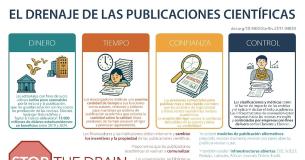
THE DRAIN: El drenaje de las Publicaciones Científicas. Editoriales comerciales drenan dinero, tiempo, confianza y control
PREPRINT disponible en: https://arxiv.org/abs/2511.04820The Drain of Scientific PublishingFernanda Beigel, Dan Brockington, Paolo Crosetto, Gemma Derrick, Aileen Fyfe, Pablo Gomez Barreiro, Mark A. Hanson, Stefanie Haustein, Vincent Larivière, Christine Noe, Stephen Pinfield, James WilsdonThe domination of scientific publishing in the Global North by major commercial publishers is harmful to science. We need the most powerful members of the research community, funders, governments and Universities, to lead the drive to re-communalise publishing to serve science not the market.El Drenaje de las Publicaciones CientíficasEl dominio de las publicaciones científicas en el Norte Global por parte de las grandes editoriales comerciales es perjudicial para la ciencia. Necesitamos que los miembros más influyentes de la comunidad investigadora, los financiadores, los gobiernos y las universidades lideren la iniciativa de volver a comunitarizar las publicaciones para que sirvan a la ciencia y no al mercado.La ciencia bajo el control de las grandes editoriales: el
lucro por delante del conocimiento
Un estudio revela cómo el sistema de publicación
científica prioriza ganancias frente al avance del conocimiento y la integridad
académica.
El sistema editorial actual es perjudicial para la ciencia. Un nuevo
análisis en el que ha participado el Instituto de Ciencia y Tecnología Ambiental
de la Universitat Autònoma de Barcelona (ICTA-UAB) muestra que, en el sector de la publicación científica,
los intereses comerciales anteponen el beneficio económico al progreso del
conocimiento y a la integridad académica.
Las cuatro principales editoriales, Elsevier, Springer Nature, Wiley y
Taylor & Francis, generaron más de 7.100 millones de dólares en
ingresos solo en 2024, con márgenes de ganancia superiores al 30 % (mucho
más elevados que en otros sectores), y acumularon más de 14.000 millones
de dólares en beneficios entre 2019 y 2024. Gran parte de este dinero proviene
de fondos públicos destinados a investigación, que los propios investigadores
deben gastar para publicar sus trabajos o acceder a los de otros científicos.
El estudio advierte sobre un drenaje de fondos del sistema científico en
cuatro ámbitos: dinero que se desvía de la investigación, tiempo que los
investigadores dedican a publicar y revisar artículos de manera no remunerada (estimado
en 130 millones de horas solo en el año 2020), pérdida de confianza por fraudes,
retractaciones y prácticas cuestionables, y concentración del control académico
en manos de las compañías privadas.
Estas empresas también controlan las métricas como el factor de impacto de
las revistas (journal impact factor) y las bases de datos como Scopus,
definen qué investigación se considera excelente y marginan modelos
comunitarios o regionales. «Las editoriales comerciales están íntimamente ligadas
a la academia, tanto en la manera en que recopilan datos sobre nosotros como en
la forma en que están integradas en la evaluación académica», afirma Brockington,
investigador del ICTA-UAB y coautor del estudio.
Este sistema perjudica a la ciencia: fomenta la proliferación de artículos
centrada en el prestigio, lo que sobrecarga el sistema de publicación. Además,
desalienta la reflexión interdisciplinaria lenta y cuidadosa, clave para lograr
una ciencia de mayor calidad. En última instancia, contribuye a un
debilitamiento de la calidad y, por ende, a un deterioro de la confianza
pública.
Aunque el movimiento de Open Access buscaba democratizar el acceso a la
ciencia, muchas editoriales han convertido las tasas de publicación (article
processing charges, APC) en una fuente de ingresos adicional. Entre 2019 y
2023, recaudaron cerca de 9.000 millones de dólares solo en APC, sin
devolver el control de la publicación a la comunidad académica.
Esta lacra de las malas prácticas en la publicación científica es más pronunciada
en el Norte Global. En el Sur, entidades como SciELO, Redalyc, Latindex o
African Journals Online ofrecen sólidas alternativas de propiedad comunitaria. Los
autores llaman a recomunalizar la publicación científica promoviendo sistemas
comunitarios y no comerciales, con liderazgo activo de universidades, gobiernos
y agencias de financiación. En este modelo, los costes se financian mediante
sociedades científicas y sus financiadores, y los beneficios vuelven a la
investigación, al igual que los datos que genera. Los investigadores lo
reclaman una y otra vez.
Brockington insiste en que «para reformar el sistema, es necesario que los
investigadores dejen de trabajar con editoriales comerciales. Cuando te
enfrentas a organizaciones grandes y poderosas, necesitas aliados igual de
grandes y poderosos. Los tenemos: financiadores, agencias gubernamentales,
fundaciones y universidades que, de manera conjunta, podrían decidir dónde van
los fondos para la publicación, así como qué incentivos motivan a los
investigadores.».
Los investigadores que han llevado a cabo el estudio advierten que, sin
reformas profundas, el sistema seguirá priorizando las ganancias sobre el
avance del conocimiento, desperdiciando recursos públicos, el tiempo de los investigadores
y la confianza de la sociedad en la ciencia.
Beigel,
F., Brockington, D., Crosetto,
P., et al. (2025). The Drain of Scientific Publishing.
arXiv:2511.04820